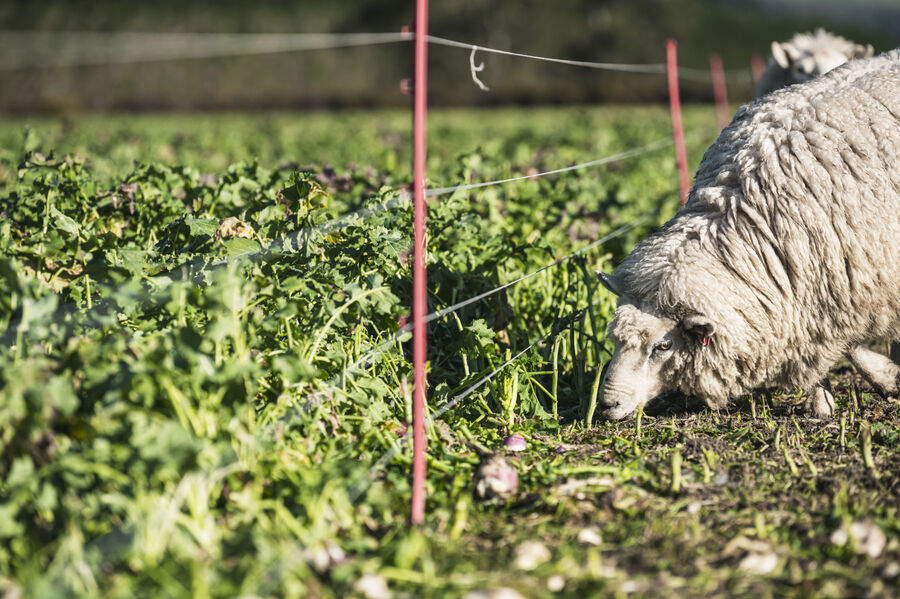
With more mouths to feed and cropping area at a premium, getting the most out of every hectare matters more than ever.
For many farming businesses, the challenge this season is straightforward - feed demand is increasing, but the area available to grow it is not necessarily keeping pace. That puts greater pressure on forage crops to deliver the yield, quality and utilisation needed to keep stock performing.
Brassicas have an important role to play, but choosing the right variety is about more than chasing the biggest yield figure. A crop that produces plenty of dry matter is only valuable if it fits the farming system, holds its quality and can be effectively utilised by stock.
Whether the priority is growing bulk winter feed, finishing lambs, supporting young stock or getting multiple grazing’s from one paddock, variety selection can make a significant difference to the amount of usable feed produced.
Here is a breakdown of the key kale, leafy turnip, rape, turnip and swede varieties worth considering this season and where each fits best.
Kale Varieties
Kale remains a reliable option for producing substantial volumes of winter feed. With good yield potential and the ability to stand through challenging conditions, choosing the right variety comes down to stock class, target yield and grazing requirements.
Corsa Kale
A high-yielding giant kale capable of producing up to 17,000 kg DM/ha. With strong stems and an impressive leaf-to-stem ratio, Corsa is well suited to dairy and R2 cattle systems where producing maximum dry matter per hectare is the priority.
Kea Kale
A newer release from Cropmark, Kea sits in the intermediate height range and has shown promise in summer and autumn multi-graze systems. A useful option where flexibility and regrowth are important alongside feed production.
SovGold Kale
A consistent intermediate kale with strong yield potential and a substantial stem component. Very late flowering helps maintain feed quality later into the season, making it a good option where winter grazing extends over a longer period.
Regal Kale
A proven intermediate variety from PGG Wrightson Seeds. Reliable across a range of conditions and suitable for all stock classes, Regal offers strong late-winter leaf retention, helping maintain feed availability as the season progresses.
MD Kale
A balanced variety offering a combination of yield and feed quality. Seed treatment supports establishment, making MD a practical choice where early vigour and getting the crop away strongly are priorities.
Leafy Turnips
When fast-growing, high-quality feed is needed, leafy turnips offer plenty of flexibility. Their ability to establish quickly and recover after grazing makes them particularly useful for filling summer and autumn feed gaps.
Hunter Turnip
Fast to establish with strong strike rates, Hunter is well suited to summer grazing and rotational systems. Its reliable regrowth makes it a practical option where multiple grazing’s are needed from the same area.
Pacer Turnip
A consistent, high-quality forage option with good grazing flexibility. Pacer is less prone to bolting, which can be valuable when sowing dates or seasonal conditions are less predictable.
Pasja II Brassica
A rape-turnip hybrid combining rapid growth with excellent regrowth potential. Capable of being grazed in as little as 45 days, Pasja II is particularly useful for producing multiple rounds of quality feed through summer and autumn.
Rape Varieties
Forage rape offers a good balance of yield, feed quality and grazing flexibility. It is particularly useful for finishing stock and supporting growth rates, with varieties available to suit both single and multiple grazing systems.
Pillar Rape
A versatile, productive variety with good regrowth potential. Pillar performs across a range of grazing systems and is a dependable option where consistent feed production is required.
Mainstar Rape
An early-maturing variety with strong aphid tolerance and good multi-graze potential. Mainstar also works well in companion mixes with species such as plantain and clovers, offering flexibility in summer forage programmes.
Spitfire Rape
A high-yielding variety with approximately 90-day maturity. Spitfire performs well in multi-graze systems, combining good utilisation with the ability to recover and produce further feed.
Vixen Rape
An early-maturing option at approximately 75 days, with a high leaf-to-stem ratio. Vixen is well suited to systems requiring earlier grazing without compromising feed quality.
Rifleman Rape
A New Zealand-bred Cropmark release offering good adaptability and regrowth. Capable of delivering two to three grazing’s from late-spring or early-autumn sowing, Rifleman is a strong option for farmers looking to maximise feed production over multiple grazing rounds.
Turnip Varieties
Turnips can produce large volumes of quality feed over relatively short growing periods. For farms facing summer feed pressure, the right variety can help bridge a feed deficit or lift the amount of dry matter grown from a limited area.
Barkant Turnip
A very high-yielding, early-maturing variety capable of producing up to 15 tonnes of dry matter per hectare in 60–90 days. With high metabolisable energy, Barkant is a strong option where the objective is to grow a substantial volume of summer feed quickly.
Green Globe Turnip
A versatile variety suited to summer, autumn and winter grazing. Green Globe performs across a range of conditions and provides flexibility for farmers managing different seasonal feed requirements.
Marco Turnip
A tetraploid variety producing nutrient-dense feed for cattle and sheep. Particularly useful for supporting young stock growth and maintaining animal performance when pasture supply is under pressure.
Rival Turnip
A fast-maturing summer turnip with improved mosaic virus tolerance. A useful option in regions where disease pressure can affect crop performance and reliability.
Swede Varieties
Swedes remain an important part of winter feed planning, particularly where high yields and reliable feed supply are needed through the colder months. Yield potential, disease tolerance, maturity and grazing timing are all important considerations when selecting a variety.
Clutha Gold Swede
A late-maturing variety with tolerance to clubroot, dry rot and powdery mildew. Producing yellow-fleshed bulbs with yield potential up to 18 tonnes per hectare, Clutha Gold is a dependable option for producing substantial volumes of winter feed.
Earnslaw Swede
An early-maturing release from PGG Wrightson Seeds. Earnslaw produces soft bulbs and offers strong tolerance to dry rot and Alternaria. Suitable for all stock classes, including youngstock.
Massie Swede
An early-maturing variety from Agricom, producing palatable, yellow-fleshed bulbs. A good fit for early winter grazing across a range of stock classes.
Saddleback Swede
A New Zealand-bred Cropmark variety producing a strong leaf canopy and consistent, high-yielding bulbs. Saddleback is a lower dry matter type, offering another option for winter feed programmes.
Triumph Swede
A high-yielding, yellow-fleshed variety with strong leaf retention and excellent dry rot tolerance. A reliable option for maintaining feed supply through winter.
All swede varieties are available for conventional and precision sowing.
Making Every Hectare Count
With feed demand high and cropping area limited, there is little room for underperforming crops.
The highest-yielding variety on paper is not automatically the most profitable option. What matters is how much usable dry matter makes it into the animal, what it costs to grow and whether it delivers feed when the farming system needs it.
Before locking in a brassica programme, consider:
Yield potential: How much dry matter does the paddock need to produce?
Feed timing: When will the crop be needed, and for how long?
Stock class: Is the priority maintenance, growth or finishing performance?
Utilisation: How much of the crop can realistically be grazed?
Grazing flexibility: Is a single high-yielding crop or multiple grazing rounds the better fit?
Cost per kilogram of dry matter: What will it cost to grow and utilise the feed?
Getting these decisions right at the planning stage can make a substantial difference to winter feed supply and overall farm performance.
At Catalyst, our focus is on matching the right crop to the right paddock, with variety selection, establishment, crop management and grazing all contributing to the final result.
Talk to your local Catalyst agronomist about building a brassica programme that makes the most of the land available and delivers the feed your stock need this season.